


Introduction
Chronic lower back strain is a common issue among athletes, particularly those involved in activities that require repetitive movement, twisting, or high-impact effort. Over time, the repeated stress placed on the muscles and ligaments of the lower back can lead to ongoing discomfort, stiffness, and restricted mobility. These effects not only influence athletic performance but can also interfere with daily activity and overall well-being.
This type of sports-related back injury often develops gradually due to muscle fatigue, poor posture, insufficient warm-up, or lingering effects from previous injuries. When left untreated, chronic lower back strain can gradually worsen, affecting stability and coordination during movement.
Understanding what causes chronic lower back strain, how to manage symptoms effectively, and when to seek professional care are essential for long-term spinal health. An orthopaedic specialist can help assess the underlying issues, recommend appropriate rehabilitation, and support a safe return to physical activity.
This article explores how this condition develops, its impact on athletes, and how medical guidance can facilitate recovery and help prevent future strain.
Key Takeaways:
- Chronic lower back strain in athletes often develops from repetitive strain, poor posture, or inadequate recovery rather than a single incident.
- Early diagnosis and proper rehabilitation can prevent minor strains from progressing into long-term conditions that affect performance.
- Most cases respond well to non-surgical care such as physiotherapy, rest, and movement correction, with surgery reserved for severe or unresponsive cases.
- Consistent follow-up, good training habits, and guidance from an orthopaedic specialist are essential for full recovery and long-term spinal health.

What Should Athletes Know About Chronic Lower Back Strain
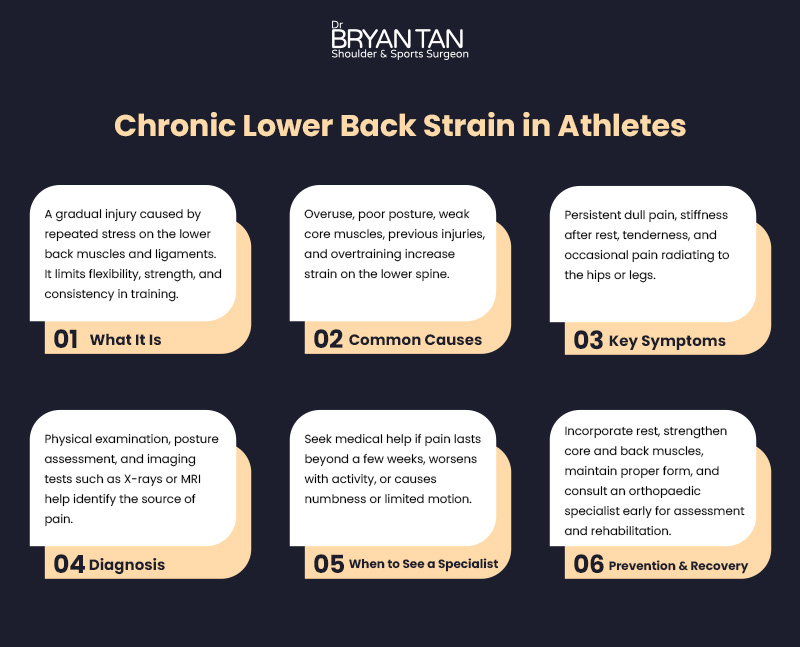
Chronic lower back strain is a gradual injury involving the muscles or ligaments of the lower spine, often caused by repeated stress over time. It can affect athletes in nearly every discipline, as the lower back is engaged in most forms of movement, from sprinting to weightlifting. When the strain becomes persistent, it can limit flexibility, reduce strength, and disrupt training consistency. Recognising its causes early and seeking timely care are crucial steps in protecting spinal health and sustaining long-term performance.
Common Causes of Chronic Lower Back Strain
Chronic lower back strain rarely results from a single injury. It usually develops gradually, as repeated movement and inadequate recovery place ongoing stress on the muscles, ligaments, and joints supporting the spine. Over time, this cumulative strain can lead to inflammation, reduced flexibility, and persistent pain. Recognising the leading causes helps athletes train smarter, recover better, and reduce the likelihood of recurrence.
Overuse and Repetitive Movements
Sports that demand frequent running, twisting, or bending, such as tennis, golf, rowing, and gymnastics, can place continuous pressure on the lower back. Each movement may seem minor, but the repetitive nature of these motions fatigues the surrounding muscles and connective tissues. Over time, the body struggles to recover fully between sessions, leading to microtears, inflammation, and chronic discomfort that can limit athletic performance.
Poor Posture or Incorrect Technique
Improper movement technique during sports or training amplifies strain on the lower back. Common examples include lifting weights with a rounded spine, arching excessively when serving in tennis, or over-rotating during a golf swing. These small, repeated errors disrupt spinal alignment, placing uneven load on the back muscles and joints. Over months or years, this imbalance can result in ongoing stiffness and pain that is difficult to correct without retraining posture and movement mechanics.
Muscle Imbalances and Lack of Flexibility
Balanced muscle strength is essential for spinal stability. When the abdominal, gluteal, or hip muscles are weak, the lower back compensates by working harder to support posture and movement. Tight hamstrings and hip flexors further restrict range of motion, altering movement efficiency and increasing tension on the lumbar region. This combination of weakness and inflexibility often leads to fatigue and chronic strain, particularly in sports that require explosive or repetitive motion.
Previous Injuries
Old injuries, such as sprains, disc irritation, or ligament strain, can weaken the soft tissues that stabilise the lower spine. If rehabilitation is incomplete or athletes return to sport too early, residual tightness or scar tissue can limit flexibility and disrupt proper movement patterns. These lingering effects make the back more susceptible to repeated strain, especially under high-intensity training or competition.
Age and Overtraining
As athletes age, spinal structures naturally undergo wear and tear. The discs between vertebrae lose some hydration and elasticity, reducing their ability to absorb shock. When combined with overtraining or insufficient rest, these changes increase the risk of chronic lower back strain. Consistently training without allowing for recovery prevents muscles and connective tissues from fully repairing, which gradually weakens the lower back’s resilience.
Understanding these causes highlights the importance of balanced training, proper recovery, and early intervention. With mindful movement and adequate rest, athletes can protect their lower back and maintain long-term spinal health.
How Chronic Lower Back Strain Is Diagnosed
Accurate diagnosis is crucial for orthopaedic care in athletes, as the symptoms of chronic lower back strain can overlap with those of other spinal or muscular conditions. Determining the actual source of pain requires a detailed evaluation that combines clinical assessment, imaging, and functional testing.
Recognising the Symptoms
Athletes with persistent lower back discomfort often report dull or aching pain that worsens after physical activity and eases with rest. Stiffness is common, especially after long periods of sitting or upon waking, and may limit flexibility or movement. Muscle tightness or tenderness is often felt across the lower back, and in some cases, the pain may radiate to the hips or upper legs, suggesting minor nerve irritation or inflammation in surrounding tissues.
Clinical Examination and Tests
Diagnosis usually begins with a physical assessment. The doctor evaluates posture, spinal alignment, and range of motion to pinpoint the affected muscles or ligaments. Manual palpation helps identify areas of tightness or tenderness, while movement-based tests reveal how the back responds to bending, twisting, or extension.
To obtain a clearer picture of internal structures, imaging techniques such as X-rays, MRI, or CT scans may be used. X-rays can highlight bone alignment and detect fractures, while MRI and CT scans provide detailed views of soft tissues, helping to identify disc problems, inflammation, or other abnormalities that may contribute to pain. Functional assessments can further reveal imbalances or weaknesses in the surrounding muscles that place added strain on the spine.
Why Accurate Diagnosis Matters
Chronic lower back strain is typically diagnosed once other spinal conditions, such as herniated discs, joint degeneration, or nerve compression, have been ruled out. Consulting a specialist ensures that these possibilities are carefully evaluated and considered. An accurate diagnosis allows for a treatment plan that targets the specific source of strain, minimises recurrence, and supports full functional recovery. Misdiagnosis, by contrast, may delay healing and increase the risk of long-term discomfort.
When Should You See a Back Specialist
Seeking help from a back specialist early can stop a mild strain from turning into a chronic problem. Timely assessment identifies the cause of discomfort, allowing treatment to begin before it affects performance or daily function. Early care also lowers the risk of further injury and supports a smoother recovery.
Warning Signs to Watch For
Back pain that persists beyond a few weeks, worsens despite rest, or limits daily activity should prompt medical review. Other warning signs include pain radiating to the hips or legs, tingling or numbness, and difficulty bending or twisting without discomfort. These symptoms may indicate nerve involvement or structural strain that requires professional evaluation.
How a Specialist Can Help
A lower back pain specialist conducts a thorough evaluation to identify the underlying cause of the pain. This may involve physical assessments, imaging tests, and discussions about training routines or posture habits. Based on the findings, they can recommend targeted treatments, such as physiotherapy, stretching exercises, or adjustments to activity levels. These interventions help strengthen supporting muscles, improve flexibility, and promote recovery while reducing the likelihood of recurrence.
The Role of a Sports Injury Doctor
For athletes, a sports injury doctor provides care that considers both the physical demands of training and the goal of returning safely to sport. They design rehabilitation programmes that focus on lower back rehabilitation and back pain management, ensuring movements are retrained correctly and spinal stability is restored. This sport-specific approach supports recovery while protecting the spine from future strain.
Early consultation with a specialist ensures that athletes receive timely diagnosis and management, reducing the risk of long-term pain and promoting sustained athletic performance.
What Treatment Options Can Help Athletes Recover from Chronic Lower Back Strain
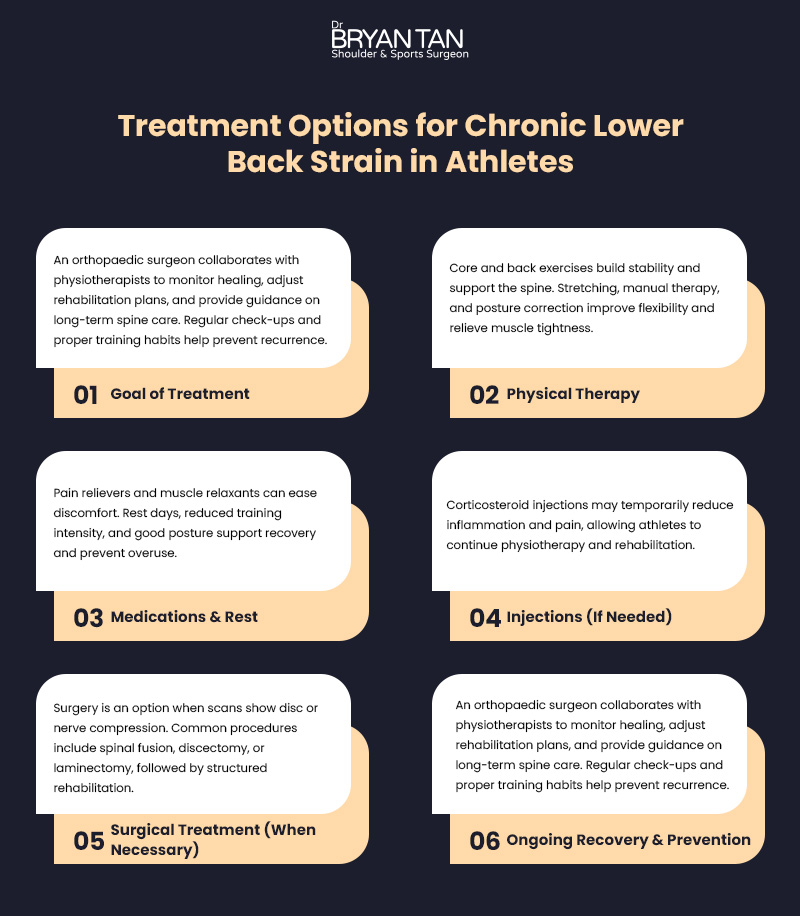
When chronic lower back strain begins to interfere with training or daily movement, structured management becomes essential. The aim of treatment is to alleviate pain, restore flexibility, and strengthen supporting muscles, allowing athletes to return to activity safely. Most cases improve with non-surgical methods, while surgery is only considered when conservative care fails to provide relief.
Non-Surgical Treatment Methods
Most athletes with chronic lower back strain benefit from a gradual approach that focuses on relieving discomfort and improving movement control without surgery.
Physical Therapy
Physiotherapy plays a central role in recovery, helping to rebuild strength and stability in the lower back. Exercises target the core, hips, and surrounding muscles that support the spine. Stretching routines enhance flexibility, while manual therapy and massage help alleviate tightness and promote circulation. Postural retraining also plays a key role in correcting faulty movement patterns that may have contributed to the strain.
Cold vs Heat Therapy
Cold and heat therapies can both be helpful in managing pain and inflammation, depending on the stage of recovery. Applying cold packs during the early phase of injury helps reduce inflammation, swelling, and sharp pain by constricting blood vessels. Once the initial inflammation subsides, heat therapy becomes beneficial for easing stiffness, improving blood flow, and relaxing tight muscles. Alternating between cold and heat can also help manage ongoing discomfort during rehabilitation.
Medications
Short-term pain relief can help athletes stay comfortable while healing. Over-the-counter medications, like ibuprofen or paracetamol, may help reduce inflammation and muscle soreness. In some cases, muscle relaxants are prescribed to relieve spasms and support better mobility. Topical creams or medicated patches may also offer localised relief from muscle discomfort.
Lifestyle Changes and Rest
Rest and recovery are vital for healing chronic muscle strain. Adjusting training intensity, spacing out workouts, and incorporating rest days can prevent overuse. Ergonomic improvements, such as maintaining proper posture while sitting, lifting, or performing exercises, can reduce stress on the lower back and support long-term recovery.
Corticosteroid Injections
In cases of severe or persistent pain, corticosteroid injections may be used to reduce inflammation around the affected tissues. These provide temporary relief, allowing athletes to participate more comfortably in physical therapy and rehabilitation. While not a long-term solution, they can help break the pain cycle and support progress in recovery.
When Is Surgery Needed for Chronic Lower Back Strain
Surgery is usually considered only when non-surgical treatments have not brought sufficient improvement after several months. It may also be advised when scans reveal structural problems, such as disc herniation or nerve compression, that affect movement, strength, or comfort. The decision to proceed depends on the severity of the symptoms, the extent of spine involvement, and the athlete’s individual recovery goals.
Types of Surgical Procedures
- Spinal Fusion: This procedure stabilises the spine by joining two or more vertebrae together. It helps limit excessive movement between spinal segments, easing pain caused by instability or degeneration.
- Discectomy: The surgery involves removing part of a damaged or slipped disc that is pressing on nearby nerves. Relieving the pressure helps reduce pain, numbness, and weakness while improving movement and daily function.
- Laminectomy: A small section of bone, known as the lamina, is removed from the vertebra to relieve pressure on the spinal cord or nerve roots. It can improve flexibility and ease pain related to nerve compression.
Post-Surgical Rehabilitation
Recovery after surgery involves a gradual and structured rehabilitation plan. Physical therapy focuses on restoring strength, flexibility, and posture to support the spine during the healing process. Recovery time varies, but many athletes can return to sport or training within six to twelve months. Following the surgeon’s post-operative instructions closely helps ensure proper healing and lowers the chance of future injury.
How an Orthopaedic Surgeon Supports Recovery and Rehabilitation
An orthopaedic surgeon’s role extends beyond diagnosing and treating the injury. They play an active role in guiding patients through recovery, rehabilitation, and long-term spine care. Their involvement helps ensure that each stage of healing is managed safely.
Post-Treatment Care
After the initial treatment, the orthopaedic surgeon monitors the patient’s recovery to ensure that healing is progressing as planned. They work closely with physiotherapists to tailor rehabilitation programmes according to each patient’s needs, adjusting exercises and activity levels as recovery advances. This collaborative approach helps address lingering symptoms, prevents complications, and promotes steady improvement.
Rehabilitation and Preventive Care
Rehabilitation aims to restore movement, improve stability, and reduce the risk of re-injury. Strengthening the core and back muscles, improving flexibility, and reinforcing proper posture all help protect the spine during physical activity. The surgeon may also recommend preventive habits such as regular stretching, proper warm-up and cool-down routines, and gradual progression in training intensity to minimise future strain.
Ongoing Monitoring
Consistent follow-up with an orthopaedic doctor is important to track progress and make necessary adjustments to treatment or training. These reviews help ensure that recovery stays on course and that the spine continues to function optimally. Ongoing monitoring also enables early intervention if symptoms recur, thereby supporting long-term spinal health and ensuring safe athletic performance.
Questions You Might Have
1. What Are the Risk Factors for Chronic Lower Back Strain in Athletes?
Several elements can increase the likelihood of developing chronic lower back strain. Age, sport type, and training intensity all play a role. Activities that involve frequent twisting, heavy lifting, or sudden directional changes place continuous stress on the lower spine. Overtraining without proper rest, a weak core or hip muscles, and a history of previous back injuries can also heighten the risk of recurring strain.
2. How Long Does It Take to Recover from Chronic Lower Back Strain?
Recovery time depends on the severity of the injury and the body’s response to treatment. With consistent non-surgical care, including physiotherapy, rest, and activity modification, most athletes begin to show improvement within six to eight weeks. In cases requiring surgery, recovery can take several months and involves a gradual rehabilitation process under the supervision of a medical professional.
3. When Should I Consider Surgery for Chronic Lower Back Strain?
Surgery is generally considered when pain continues despite months of conservative treatment, or when tests show nerve compression or structural damage such as a slipped disc. If symptoms begin to significantly impact daily activities, sleep, or overall quality of life, surgical treatment may be necessary to relieve pressure on the spine and restore normal function.
4. Can Physical Therapy Help Prevent Future Back Injuries?
Yes. Physical therapy not only supports recovery but also helps prevent recurrence. Strengthening the core, back, and hip muscles enhances spinal support, while flexibility and posture training improve movement efficiency. Learning proper lifting techniques, stretching regularly, and maintaining good form during sport can all help protect the spine from future injuries.

Conclusion
Chronic lower back strain is a common issue faced by many athletes; however, with timely care and a proper management plan, recovery is achievable. Early diagnosis, consistent rehabilitation, and adequate rest are vital to restoring mobility and preventing long-term complications. Addressing the root causes and following a structured treatment plan can help athletes rebuild strength, stability, and confidence in their performance.
Seeking professional help early, rather than waiting for pain to progress, promotes a smoother recovery and reduces the risk of recurring strain. Working with an orthopaedic specialist ensures that treatment is tailored to the individual’s condition, lifestyle, and sporting activity, supporting long-term spinal health and sustained performance.
For care and guidance in managing chronic lower back strain, contact Dr Bryan Tan, an orthopaedic specialist committed to helping patients recover safely and return to active living.



 Dr Bryan Tan